


Picture this: it’s the 6th century BCE, and everyone in ancient Greece believes the gods look just like humans—Zeus with his flowing beard, Athena with her piercing eyes, and Apollo with his golden locks. Then along comes a poet from Colophon who dares to say, “What if we’ve got this entirely wrong?” That poet was Xenophanes, and his bold challenge to Greek religion would spark one of philosophy’s first great revolutions.
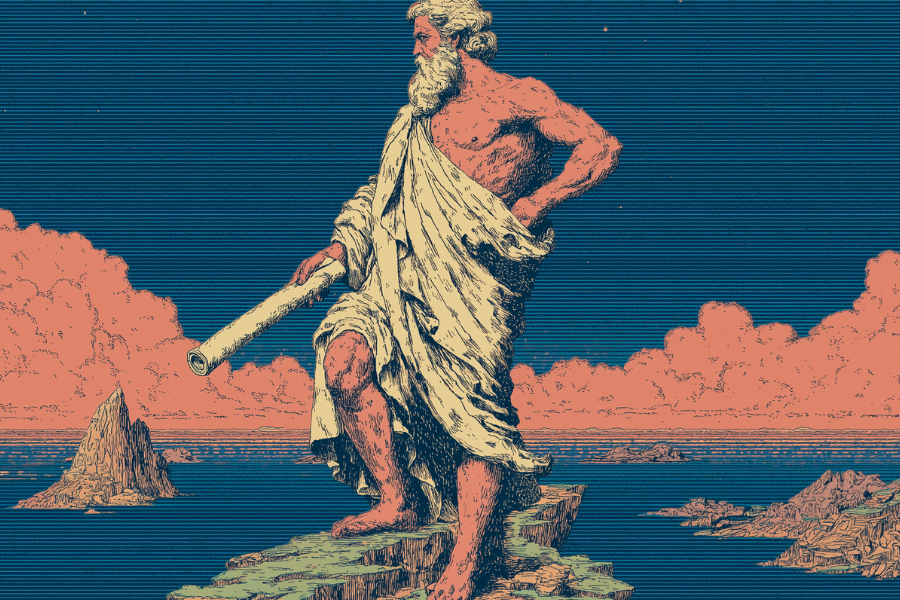
While most people know Socrates as the father of Western philosophy, Xenophanes was already asking the big questions centuries before Socrates was even born. This fascinating thinker didn’t just write poetry—he used his verses as weapons against conventional wisdom, becoming one of history’s first sceptics and arguably the world’s first monotheist.
Who Was Xenophanes?
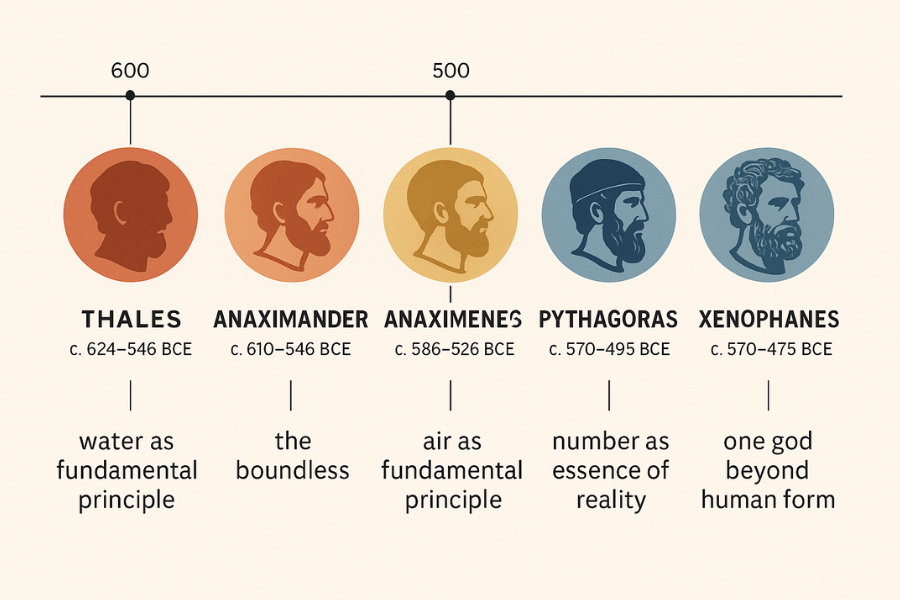
Xenophanes of Colophon lived an extraordinary life that spanned nearly a century, from around 570 to 475 BCE. Born in the wealthy city of Colophon on the coast of what’s now Turkey, he grew up during one of the most intellectually vibrant periods in human history. Colophon wasn’t just any ancient city—it was a cultural hotspot where merchants, scholars, and artists gathered to exchange ideas from across the Mediterranean world.
Think of Colophon as the Silicon Valley of ancient Greece, buzzing with innovation and fresh thinking. This cosmopolitan environment shaped young Xenophanes profoundly, exposing him to diverse cultures and beliefs that would later fuel his philosophical skepticism. Unlike many philosophers who came from wealthy families, Xenophanes likely had humble beginnings, which perhaps made him more willing to question the established order.

When political upheavals forced him to leave his homeland around 545 BCE, Xenophanes became a wandering intellectual—part poet, part performer, part philosopher. He travelled throughout the Greek world for over six decades, sharing his revolutionary ideas through poetry and public performances. This nomadic lifestyle wasn’t just a career choice; it was a philosophical practice, allowing him to observe different societies and challenge their assumptions about truth, knowledge, and the divine.
What makes Xenophanes truly remarkable is how he bridged two worlds: the artistic tradition of epic poetry and the emerging field of rational inquiry we now call philosophy. He didn’t abandon poetry when he became a philosopher—instead, he weaponised it, using memorable verses to spread ideas that would have been dangerous or incomprehensible in dry philosophical prose.
Challenging the Greek Gods
Imagine being the first person to stand up at a dinner party and announce that everyone’s religious beliefs are fundamentally wrong. That’s essentially what Xenophanes did, except the dinner party was all about ancient Greek civilisation, and the stakes were considerably higher than social embarrassment.
Xenophanes launched a systematic attack on anthropomorphism—the human-like portrayal of gods that dominated Greek religion. He famously noted the absurdity of this thinking: “Mortals think the gods are born and have bodies, clothes, and speech like theirs.” He went further, noting that if horses and cattle could draw, they would probably depict their gods as horses and cattle too.

This wasn’t just clever wordplay—it was a devastating logical critique. Xenophanes argued that humans had created gods in their image rather than discovering divine truth. He mocked Homer and Hesiod, the most revered poets of his time, for depicting gods as thieves, adulterers, and liars. “Homer and Hesiod have attributed to the gods all the things that are matters of reproach and blame among humans: stealing, committing adultery, and deceiving one another.”
But Xenophanes didn’t stop at criticism—he offered an alternative. He proposed the existence of one supreme god, unlike mortals in both form and thought, who governs all things through the power of mind alone. This god doesn’t move around like the Greek deities, doesn’t have human emotions or physical form, and certainly doesn’t engage in the petty squabbles that fill Greek mythology.
This monotheistic vision was revolutionary, predating similar ideas in other philosophical traditions by centuries. Xenophanes’ god was eternal, unchanging, and completely unlike anything in human experience—a radical departure from the familiar, relatable deities of popular religion. He described this divine being as “remaining in the same place, not moving at all, nor is it fitting for him to go to different places at different times, but without toil he shakes all things by the thought of his mind.”
The courage required for such ideas cannot be overstated. Xenophanes’ critiques were genuinely dangerous in a society where religious beliefs deeply intertwined with political and social structures. Yet he persisted, using humour, logic, and poetic skills to make his points memorable and compelling.
What Xenophanes Believed About Knowledge
Xenophanes began his exploration of epistemology, the study of knowledge itself, long before modern philosophers grappled with questions of truth and certainty. His insights into the limitations of human knowledge were so advanced that they wouldn’t be fully appreciated until the modern era.
Xenophanes made a startling claim that would echo through philosophy for millennia: we can never achieve absolute certainty about the truth. In one of his most profound statements, he declared, “The clear truth is, no man has seen nor will anyone know concerning the gods and about all the things I speak of. “For even if he should happen to speak what is perfectly true, he still does not know it; opinion is allotted to all.”
This wasn’t pessimism—it was sophisticated epistemological analysis. Xenophanes recognised that human knowledge is always mediated by our senses and limited by our perspective. We might stumble upon the truth, but we’d never know for certain that we had found it. This insight predates Plato’s famous allegory of the cave by over a century and anticipates modern discussions about the fallibility of human knowledge.
But here’s where Xenophanes gets really interesting: he didn’t let this skepticism paralyze him. Instead, he argued that we should seek the best possible opinions through careful investigation and reasoning. “By seeking,” he wrote, “mortals discover better in time.” This represents one of the earliest expressions of scientific methodology—the idea that through systematic inquiry, we can improve our understanding even if we can’t achieve perfect knowledge.
Xenophanes also recognised that our senses could deceive us. He pointed out that honey tastes bitter to sick people but sweet to healthy ones, suggesting that sensory experience is subjective and unreliable. This observation led him to distinguish between appearance and reality—a distinction that would become central to all subsequent philosophy.
Perhaps most remarkably, Xenophanes understood that knowledge is provisional and progressive. Unlike dogmatists who claimed certainty, he embraced intellectual humility while maintaining that the search for truth was still worthwhile. This balanced approach—sceptical yet optimistic—makes him a remarkably modern thinker.
Xenophanes’ Most Famous Quotes Explained
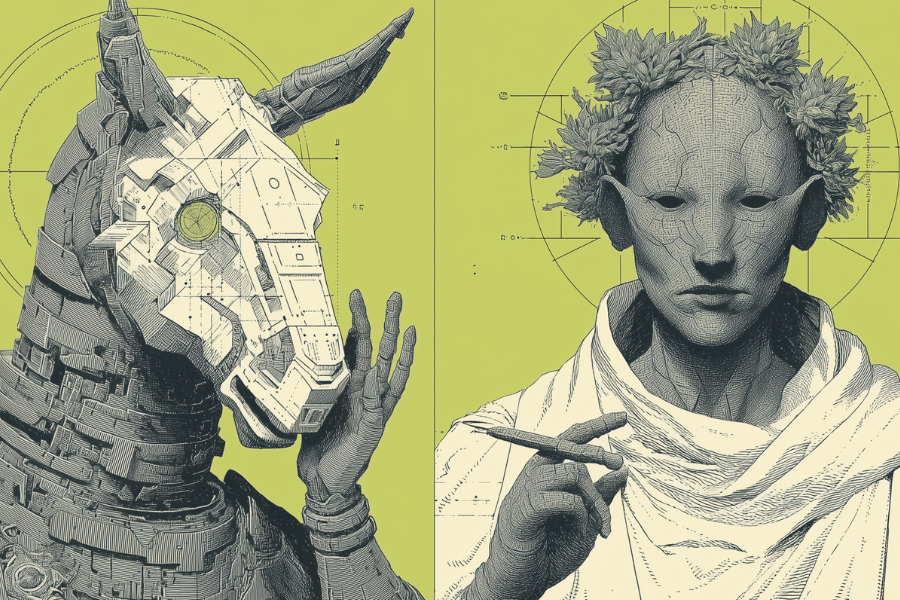
The power of Xenophanes’ philosophy lies not just in its content but in its expression. His most memorable quotes continue to challenge and inspire thinkers today. Let’s examine some of his most impactful statements and unpack their more profound meanings.
If horses, cattle, or lions had hands and could draw, they’d depict the gods as they are.
This brilliant thought experiment exposes the anthropocentrism of religious thinking. Xenophanes is pointing out that every culture creates gods that reflect their characteristics and values. It’s not that humans discovered what gods look like—we projected our image onto the divine. This quote demonstrates Xenophanes’ remarkable ability to step outside the human perspective and view our beliefs objectively.
“No man knows, or ever will know, the truth about the gods and about everything I speak of: for even if one chanced to say the complete truth, yet one knows it not; but seeming is wrought over all things.”
This profound statement captures the essence of epistemological humility. Xenophanes isn’t saying we should stop seeking truth—rather, he’s arguing that certainty is impossible and we must live with probability and careful reasoning. “Seeming is wrought over all things” suggests that appearances and interpretations inevitably colour our understanding.
“By seeking, humans find out better in time.”
Despite his skepticism about certainty, Xenophanes maintained optimism about progress. This quote embodies the spirit of scientific inquiry: through persistent investigation, we can improve our understanding even if we never achieve perfect knowledge. It’s a remarkably modern view that combines intellectual humility with practical optimism.
“Homer and Hesiod have attributed to the gods everything that is a shame and reproach among men, stealing and committing adultery and deceiving each other.”
This direct critique of Greece’s most revered poets took tremendous courage. Xenophanes wasn’t just challenging religious beliefs—he was attacking the cultural foundations of Greek society. Yet he did so with a clear moral purpose: if gods are perfect, they shouldn’t exhibit the worst human behaviours.
“One god, greatest among gods and humans, like mortals neither in form nor in thought.”
This description of divine unity represents one of history’s earliest expressions of sophisticated monotheism. Xenophanes’ god transcends human categories entirely—not just bigger or more powerful than humans, but fundamentally different in nature. This concept would influence religious and philosophical thinking for millennia.
These quotes work because they combine logical precision with poetic power. Xenophanes understood that ideas need memorable expression to survive and spread, and his mastery of language ensured his philosophy would endure.
Why Xenophanes Still Matters Today
In our age of fake news, echo chambers, and polarised debate, Xenophanes feels remarkably contemporary. His insights into the limitations of knowledge, the dangers of certainty, and the value of ongoing inquiry speak directly to our current challenges.
Consider our modern struggles with information reliability. Every day, we encounter conflicting claims about everything from health advice to political events. Xenophanes’ epistemological humility offers a framework for navigating this complexity. Instead of demanding absolute certainty, we can seek the best available evidence while remaining open to new information. This approach combines intellectual rigour with appropriate modesty—exactly what our polarised discourse needs.
Xenophanes’ critique of anthropomorphism also remains relevant in unexpected ways. While we may not worship human-like gods, we still project human characteristics onto everything from artificial intelligence to natural selection. His warning about seeing our image everywhere applies to modern biases in science, technology, and social policy. We continue to assume that others think like us, that our cultural norms are universal, and that our perspective is objective.
The religious implications of Xenophanes’ thinking continue to resonate. His sophisticated monotheism influenced early Christian, Jewish, and Islamic theology, while his skepticism about anthropomorphic deities challenges fundamentalist interpretations across traditions. His approach—reverent toward the divine but critical of human religious constructions—offers a middle path between dogmatism and atheism.
Perhaps most importantly, Xenophanes modelled intellectual courage. He demonstrated that it’s possible to challenge fundamental assumptions while remaining respectful and constructive. His critiques of Greek religion weren’t motivated by hostility but by a desire for truth and moral consistency. This example is particularly valuable in our era of harsh, personal attacks on opposing viewpoints.
In scientific thinking, Xenophanes’ influence persists through the principle of fallibilism—the idea that our current theories might be wrong and should always be open to revision. This humble approach to knowledge has been crucial to scientific progress, from Darwin’s theory of evolution to Einstein’s relativity. Xenophanes understood that the best we can do is seek better approximations of truth, not final answers.
The poet-philosopher’s integration of artistic expression with logical argument also offers lessons for modern communication. In an age of short attention spans and information overload, his ability to make complex ideas memorable and engaging through literary skill remains a model worth emulating.
Further Reading on Ancient Skepticism
Many of history’s greatest thinkers would walk through the door that Xenophanes opened. His epistemological insights helped establish the foundation for the entire sceptical tradition in Western philosophy, and his influence can be traced through centuries of intellectual development.
For those interested in exploring the broader tradition of ancient skepticism, several paths lead forward from Xenophanes’ pioneering work. Pyrrho of Elis (c. 360-270 BCE) developed Xenophanes’ ideas into a more systematic form of skepticism, arguing that we should suspend judgement about most matters due to the impossibility of certain knowledge. The later Academic Sceptics, including Arcesilaus and Carneades, brought sceptical arguments into Plato’s Academy, creating sophisticated critiques of Stoic claims about knowledge.
Sextus Empiricus provides our most complete source for understanding ancient sceptical arguments in his “Outlines of Pyrrhonism.” His detailed exploration of sceptical tropes and their applications shows how Xenophanes’ basic insights about the limitations of human knowledge were developed into powerful philosophical tools.
The influence of Xenophanes also flows through the work of Democritus, who combined atomic materialism with epistemological modesty, arguing that “truth lies in an abyss.” This tradition would eventually influence Islamic philosophers like Al-Ghazali and later European thinkers, including Montaigne, Descartes, and Hume.
For modern readers, exploring the connection between ancient skepticism and contemporary epistemology reveals surprising continuities. Philosophers like Karl Popper, with his emphasis on falsifiability, and Thomas Kuhn, with his analysis of paradigm shifts in science, echo themes first articulated by Xenophanes over two millennia ago.
The religious dimensions of Xenophanes’ thought connect to broader studies of ancient theology and the development of monotheistic thinking. His sophisticated approach to divine attributes influenced not only Greek philosophy but also the theological traditions of Christianity, Judaism, and Islam through figures like Philo of Alexandria and the early Church Fathers.
Understanding Xenophanes in context also requires exploring the broader intellectual ferment of the 6th century BCE, often called the “Axial Age” by historians. This period saw the emergence of new forms of thought across multiple civilisations, from Confucius in China to Buddha in India to the Hebrew prophets in Israel. Xenophanes’ innovations were part of a global transformation in human consciousness that established the foundations for all subsequent philosophy and religion.
Are you prepared to delve deeper into the realm of ancient philosophy? Explore our comprehensive guides to other Pre-Socratic thinkers, or discover how ancient skepticism influenced modern scientific thinking. The questions Xenophanes raised about knowledge, truth, and the divine continue to shape how we understand the world today.


