


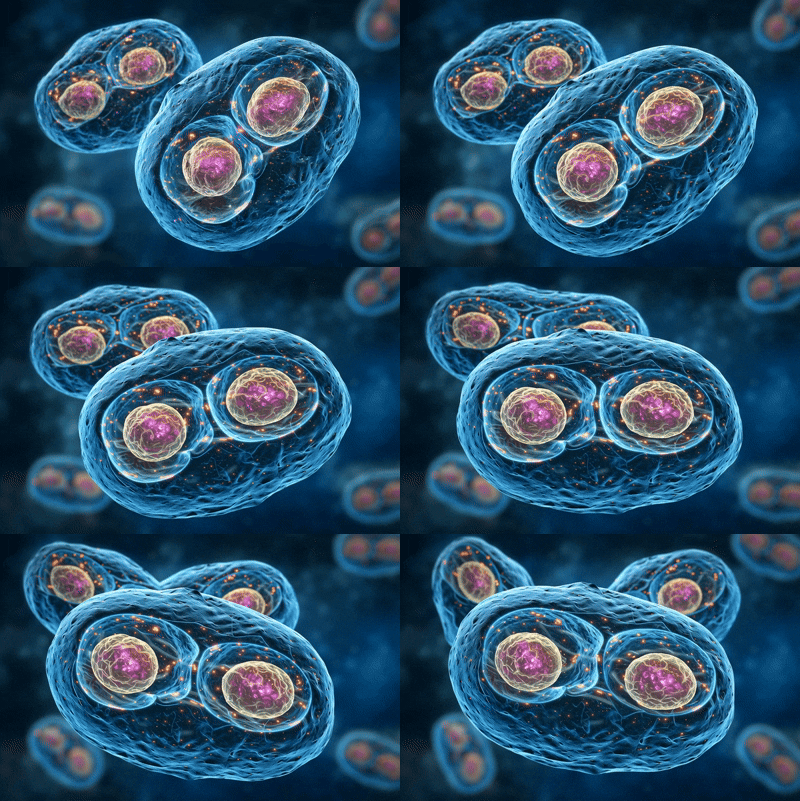
In the dim glow of his laboratory microscope, Nobel laureate Paul Nurse encountered something extraordinary: a cluster of yeast cells so remarkably small they seemed to defy the very laws of cellular existence. These weren’t just any cells—they were mutants, frozen in time at the precise moment of division, revealing secrets that would unlock one of biology’s most fundamental mysteries. In that “eureka-style moment,” breaking through what he later called “long periods of drudgery,” Nurse glimpsed something profound about the nature of life itself. The cell, he realized, was “biology’s atom—the simplest entity that we can, without reservation, say is living.”
But what exactly makes something alive? It’s a question that has haunted humanity since we first gazed up at the stars and wondered whether we were alone, since we first peered into microscopes and marveled at the hidden worlds within. Today, as we stand on the threshold of creating synthetic life, detecting biosignatures on distant worlds, and watching artificial intelligence evolve before our eyes, this ancient question has never been more urgent.
Definition of life
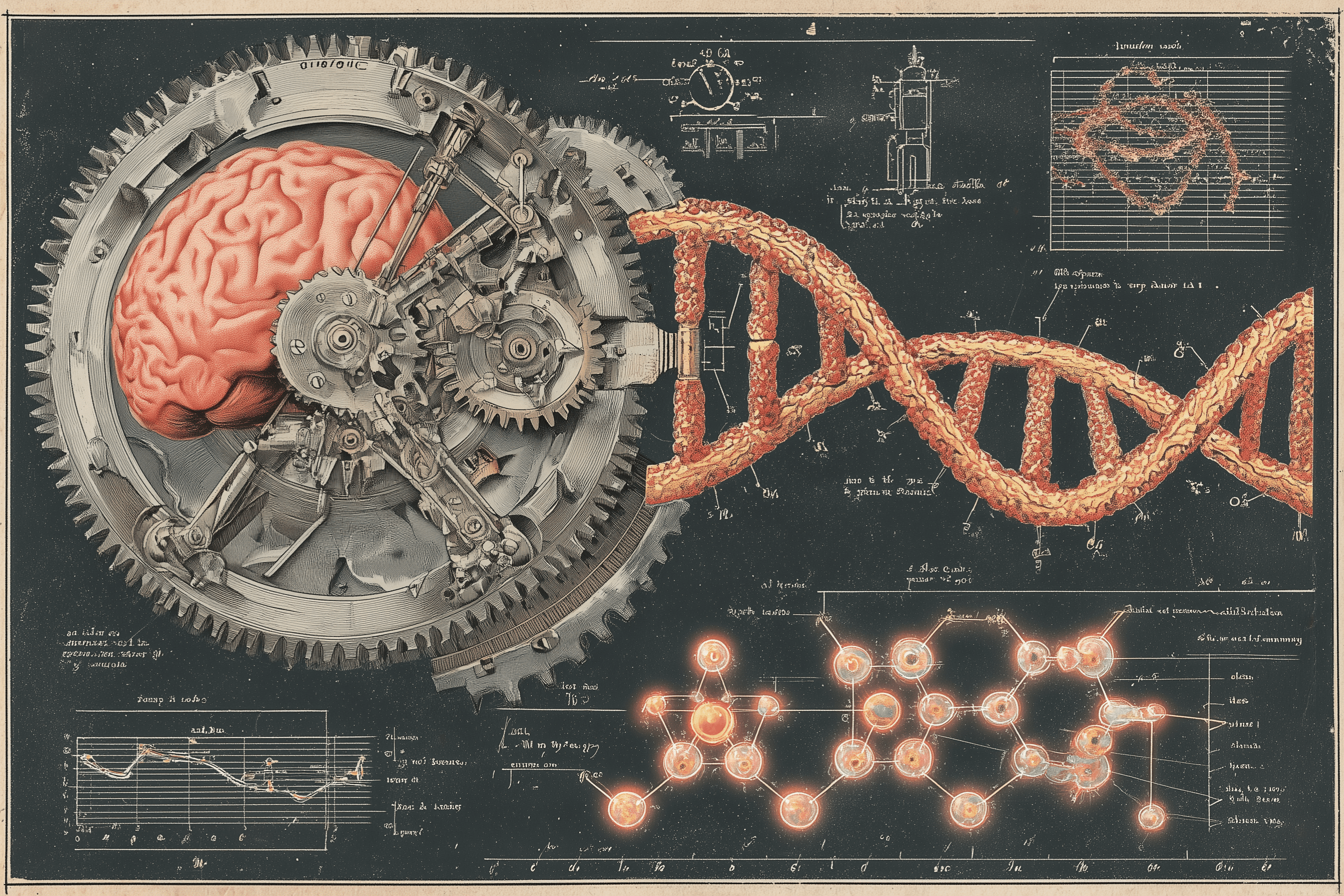
Our modern understanding of life began to crystallize in 1944 when physicist Erwin Schrödinger published his revolutionary book “What is Life?” In those wartime pages, he introduced the world to the concept of genetic “code-script”—the idea that chromosomes contain “in some kind of code-script the entire pattern of the individual’s future development and its functioning in the mature state.” Schrödinger envisioned hereditary material as an “aperiodic solid” whose atoms arrange themselves in countless configurations, serving as both “architect’s plan and builder’s craft in one.”
His prescient words directly inspired Watson and Crick’s discovery of DNA structure nearly a decade later. As Francis Crick wrote to Schrödinger in 1953: “Watson and I were once discussing how we came to enter the field of molecular biology, and we discovered that we had both been influenced by your little book What is Life?”
Fast-forward to the 1990s, and NASA faced a different challenge: how do you search for life on other worlds when you can’t even agree on what life is? Their solution became the field’s most influential working definition: “Life is a self-sustaining chemical system capable of Darwinian evolution.” Crafted by a committee led by Gerald Joyce, this definition emphasizes three crucial elements: self-sustainability (no continuous intervention needed), chemical basis (focusing on molecular life), and evolutionary capability (reproduction with heritable variation and selection).
Yet even Joyce acknowledged his definition’s limitations. His own RNA evolution experiments technically met the criteria but weren’t “true” life forms due to limited information-carrying capacity. As he later reflected: “You need enough information to keep evolving: sensory systems, nervous systems, things like photosynthesis.”
Seven Core Attributes of Life
Beyond NASA’s framework, researchers have identified seven fundamental attributes that characterize living systems: organic nature (carbon-based chemistry), highly organized structures (complex molecular organization), pre-programmed responses (automatic reactions to stimuli), interactive capabilities (engagement with environment and other organisms), adaptive responses (adjusting to environmental changes), reproductive capacity (generating offspring), and evolutionary potential (undergoing change through selection).

Crucially, reproduction and evolution operate as “facultative” attributes at the individual level—a mule can’t reproduce, but it’s undeniably alive. These attributes work together as an interconnected system, much like the instruments in an orchestra creating a symphony that emerges from their collective performance.
Chemistry vs. Information: The Great Divide
At the heart of modern life science lies a fascinating tension between two paradigms. The chemistry-first approach emphasizes metabolism, energy transformation, and molecular interactions—viewing life as emerging from chemical complexity through self-assembly, compartmentation, and catalytic networks. Meanwhile, the information-first approach prioritizes genetic codes, regulatory networks, and data processing—seeing life as fundamentally computational.
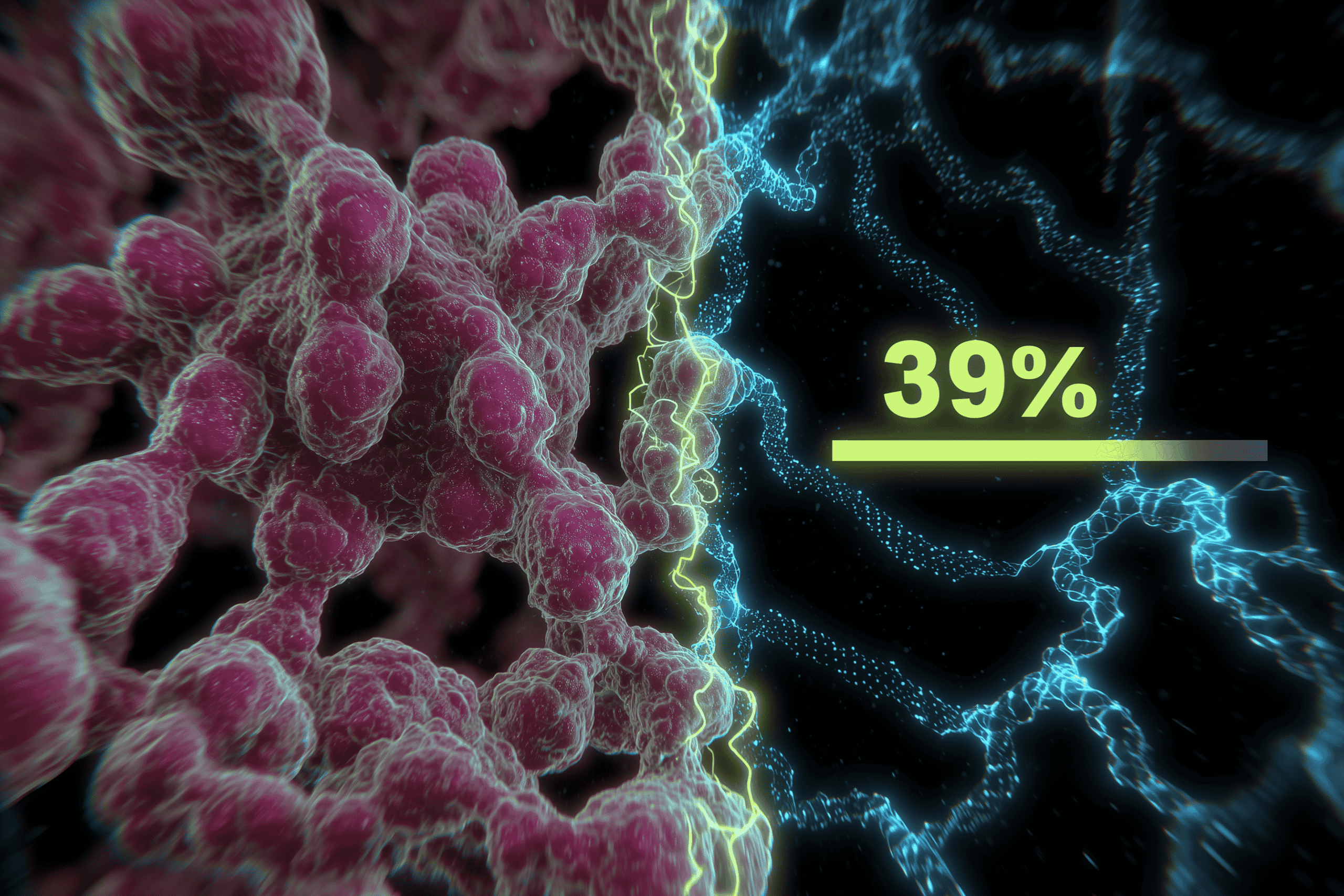
Recent advances in synthetic biology have intensified this debate. In 2017, researchers at the University of Trento achieved something remarkable: they created artificial cells that could engage in two-way chemical communication with living bacteria, essentially passing a “cellular Turing test.” These synthetic cells “listened” to bacterial chemical signals through quorum sensing and responded by glowing, achieving a quantified “life-likeness” score of 39% based on how well they could deceive natural cells.
This breakthrough illuminates life’s dual nature. DNA operates as a true digital information system, storing an extraordinary 215 petabytes per gram—85% of Shannon’s theoretical information capacity limit. Yet this information means nothing without the chemical machinery to read, interpret, and act upon it. As physicist Christoph Adami observes: “Information is the currency of life,” but it’s a currency that can only be spent through chemistry.
Viruses: Life on the Border
Nowhere is the challenge of defining life more apparent than with viruses—those enigmatic entities that exist at the boundary between living and non-living matter. Traditional biology dismisses them as “molecular genetic parasites,” pointing to their lack of cellular structure, metabolic dependence, and inability to reproduce without hijacking host machinery.

Yet viruses challenge every definition we construct. They carry genetic material, evolve through natural selection, and adapt to environmental pressures. Revolutionary research has introduced the “virocell concept”—during infection, viruses transform host cells into viral factories, becoming the dominant organism controlling cellular functions. In this state, are they not functionally alive?
Recent discoveries have blurred the boundaries further. Giant viruses like Mimivirus possess 1,018 genes and approach bacterial size, encoding their own protein synthesis machinery. Some can even be “infected” by other viruses (virophages), displaying illness-like behavior. Up to 40% of bacterial cells in some environments exist as virocells, fundamentally changing how we count and understand microbial ecosystems.

Perhaps most remarkably, viruses may be life’s greatest innovators. They facilitate genetic exchange between distant organisms, drive evolutionary arms races that promote complexity, and continuously create novel genes during replication. Far from evolutionary footnotes, they appear to be major architects of biological innovation.
Philosophical and Existential Takes
Shakespeare’s Macbeth, in his darkest moment, declared life “but a walking shadow, a poor player that struts and frets his hour upon the stage and then is heard no more. It is a tale told by an idiot, full of sound and fury, signifying nothing.” These words have haunted philosophical discussions of life for centuries, crystallizing our deepest fears about meaninglessness in an indifferent universe.

Existentialist philosophers like Jean-Paul Sartre and Albert Camus began with this apparent meaninglessness but reached a profoundly different conclusion. If life has no inherent essence, Sartre argued, then “existence precedes essence”—we exist first, then define ourselves through choices and actions. We are “condemned to be free,” bearing complete responsibility for creating meaning in an apparently meaningless universe.
This philosophical insight resonates powerfully with our scientific understanding. Just as evolution operates without predetermined direction yet produces magnificent complexity, human consciousness emerges from mere chemistry yet creates art, love, and wonder. Life, in both its biological and existential dimensions, represents the universe’s capacity for self-organization, self-awareness, and self-determination.
The Personal Angle: Stories That Define Us
Beyond scientific criteria lies the realm of human experience—the stories we tell ourselves about what makes life meaningful. Narrative psychology reveals that humans construct “narrative identity,” weaving selected memories, values, and future aspirations into coherent life stories that provide unity and purpose.
Consider the difference between a biological definition—”a self-sustaining chemical system”—and a mother’s definition when she first holds her newborn child. Or the gap between NASA’s evolutionary criteria and a poet’s understanding of life while watching sunrise over mountains. These aren’t competing definitions; they’re different levels of a single, magnificent phenomenon.
Research shows that meaningful life stories typically feature themes of personal agency (self-direction, goals, achievement) and communion (love, friendship, helping others). People who craft “redemptive narratives”—interpreting negative experiences as leading to growth—show higher well-being and resilience. Life’s meaning emerges not just from biological processes, but from the stories we tell about those processes.
Astrobiology and the “Second Genesis”
The search for life beyond Earth has revolutionized our perspective on what life might be. Astrobiologists now employ NASA’s “Ladder of Life Detection”—a 15-feature framework recognizing that detecting life requires multiple lines of evidence rather than single measurements. They seek atmospheric biosignatures (oxygen, methane, other disequilibrium gases), surface signatures (vegetation red edge, pigment patterns), and molecular complexity indicators.

The concept of “Second Genesis”—discovering completely independent life origins—would profoundly impact our understanding. As astrobiologist Chris McKay explains: “If we had only apples and no oranges, then we might not understand fruit.” One origin of life could be a remarkable accident; two origins in one solar system would strongly suggest life is commonplace in the universe.
Recent discoveries challenge our assumptions about life’s universality. Chiral molecules (those existing as non-superimposable mirror images) show preference for specific orientations in living systems—all Earth life uses left-handed amino acids and right-handed sugars. The detection of propylene oxide, the first complex chiral molecule found in interstellar space, suggests chirality may originate before reaching planets.
But must alien life follow Earth’s chemistry? While some researchers argue for universal biochemistry based on carbon-water constraints, others explore alternative chemistries: sulfuric acid solvents, silicon-based life, or organisms thriving in dense atmospheres. The Europa Clipper mission, launched in October 2024, will conduct 49 flybys of Jupiter’s moon Europa, searching for biosignatures in its subsurface ocean using instruments designed to detect life regardless of its specific chemistry.
Putting It All Together: Life as Spectrum
Our journey through science, philosophy, and human experience reveals why binary definitions fail. Life exists not as a category but as a spectrum of organizational complexity. At one end lie simple chemical systems with minimal organization; at the other, conscious beings capable of pondering their own existence.
This understanding leads us to propose a Psychofuturia definition: “Life is the emergent process by which highly organized, carbon-based systems self-program, interact, adapt and evolve through energy-driven information exchange.” This definition captures life’s essential features while acknowledging its processual nature—life is not a thing but a doing, not a state but a becoming.
The word “emergent” recognizes that life’s properties arise from but transcend their constituent parts. “Self-program” emphasizes both genetic inheritance and real-time adaptation. “Energy-driven information exchange” bridges the chemistry-information divide, recognizing that biological systems are fundamentally about transforming energy into information and information into action.
Why It Matters for Psychofuturia
Understanding life’s true nature becomes crucial as we navigate humanity’s psychological and technological future. Artificial intelligence systems are evolving, raising questions about digital consciousness and electronic life. Synthetic biology is creating organisms that blur natural-artificial boundaries. Space exploration may soon reveal alien life forms that challenge our Earth-centric assumptions.
These developments have profound psychological implications. If we create truly conscious AI, how do we relate to digital beings? If we discover life on Mars, how does this change our sense of cosmic purpose? If we synthesize living organisms, what does this mean for our understanding of natural vs. artificial?
The answer lies in embracing life’s spectrum nature. Rather than asking “Is this alive?” we should ask “How does this system organize, process information, and create meaning?” This perspective prepares us for a future where consciousness might emerge from silicon as well as carbon, where meaning might be crafted by digital minds as well as biological ones.
Life, we discover, is not about crossing a threshold but about participating in the universe’s grandest adventure: the emergence of complexity, consciousness, and meaning from the quantum foam of possibility. Whether it arises in biological cells, synthetic organisms, or silicon networks, life represents the cosmos awakening to itself, asking questions about its own existence, and finding joy in the very process of inquiry.
As we stand at the threshold of becoming creators of life ourselves, we bear the responsibility of gardeners tending not just to biological diversity but to the infinite forms that consciousness might take. The question “What is life?” transforms from a scientific puzzle into a call to action: How will we nurture, protect, and celebrate the magnificent symphony of existence in all its myriad manifestations?
Our journey continues, each discovery revealing new mysteries, each answer spawning new questions. In this endless cycle of wonder and inquiry, we find perhaps the deepest truth about life: it is not a problem to be solved but a mystery to be lived, not a definition to be memorized but an adventure to be embraced with curiosity, humility, and awe.
What is life science in simple terms?
Life science is the study of living organisms and life processes. It focuses on understanding the structure, function, growth, origin, evolution, and interaction of living systems, from microscopic cells to entire ecosystems.
At its core, life science explores how life works, particularly at the cellular and molecular levels. Fields like cell biology, genetics, biotechnology, and physiology all fall under life sciences.
What are the four main branches of life science?
The major fields within life sciences include:
Cell Biology — Study of cells and their structures, functions, and processes
Anatomy — Structural organization of living organisms, especially animals
Morphology — Form, shape, and external structures of organisms
Physiology — Biological and chemical functions within tissues and organs
These disciplines contribute to our broader understanding of what makes organisms alive and how they function in diverse environments.
What is the philosophy of science in simple words?
Philosophy of science is the study of how science works. It examines the methods, assumptions, and implications of scientific inquiry.
Key questions include:
1. What separates science from non-science?
2. Can scientific knowledge be trusted?
3. What is the purpose of science in human life?
It helps us reflect on the reliability of scientific theories, the nature of experimentation, and the ethical and metaphysical issues surrounding scientific discovery.
What is the meaning of life in philosophy?
The philosophy of the meaning of life explores the significance of existence, asking questions like:
1. What is life?
2. Does life have inherent meaning or must we create it ourselves?
3. How can one live a meaningful life?
Philosophical Approaches to Life’s Meaning:
Meaning as Creation: (Existentialism) Life has no built-in purpose; we must create meaning through choices (Sartre, Camus).
Meaning as Discovery: (Religious/Spiritual) Life’s purpose is given or discovered through a higher power or cosmic order.
Meaning as Fulfillment: Happiness, love, creativity, and virtue provide individual meaning.
Meaning as Contribution: Life gains purpose through helping others and contributing to society.
Naturalism: Meaning arises from human potential, growth, and connection with the natural world.
Key Concepts in the Philosophy of Life:
Authenticity – Living true to oneself
Virtue – Ethical and moral living
Happiness – Joy and well-being
Transcendence – Connecting with something greater
Nihilism – The view that life lacks inherent meaning
Ultimately, there is no single answer—the search for meaning is part of being human.
What are the 7 characteristics of life in science?
To be considered alive, a system must exhibit the following seven characteristics:
1. Cellular Organization – Composed of one or more cells
2. Reproduction – Ability to produce offspring
3. Growth and Development – Change over time
4. Energy Use – Metabolism and energy processing
5. Homeostasis – Maintaining internal balance
6. Response to Stimuli – Reacting to the environment
7. Adaptation and Evolution – Changing over generations


