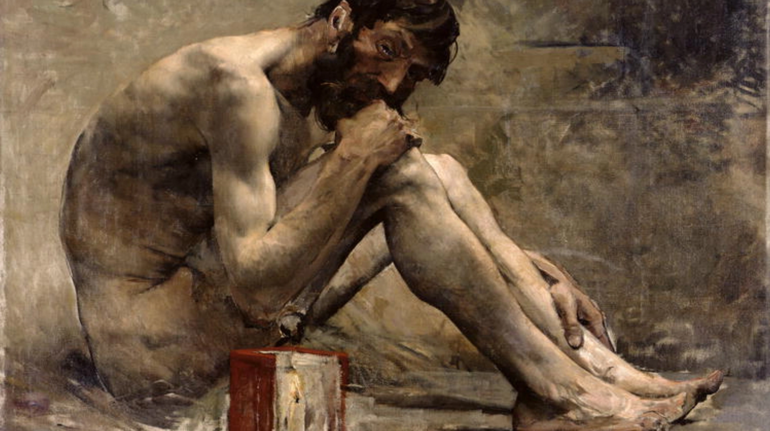
Diogenes (1873) by Jules Bastien-Lepage

Diogenes: Pursuing Truth through Simplicity

⚫ Diogenes of Sinope’s Life and Philosophy is simple. He founded the philosophy of Cynicism. He emphasizes living simply and rejecting materialism.
⚫ Diogenes’ teachings, particularly his focus on virtue and internal happiness over material wealth, have left a lasting impact, influencing modern philosophies and thinkers.
⚫ Diogenes was known for his criticism of societal norms, religious practices, and government policies, advocating for a life that aligns more with nature and personal virtue.
⚫ In Modern Times Diogenes’ philosophies is inspiring as it offers a guide for modern practices like mindfulness and minimalism.

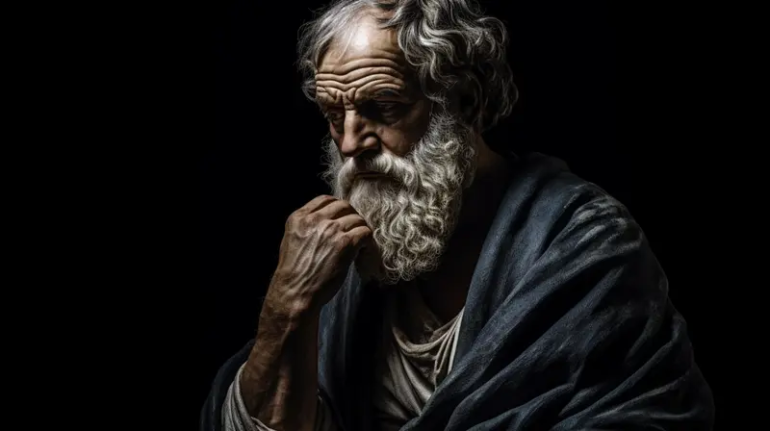
Reimagined painting of Aristotle.

Aristotle: Complete Guide to His Life, Philosophy & Lasting Impact

⚫ Aristotle, born in Stagira, Macedonia, was profoundly influenced by his early political exposure and education at Plato’s Academy in Athens.

⚫ Aristotle significantly influenced various fields, including ethics, politics, metaphysics, and natural sciences, leaving a foundational philosophical legacy.

⚫ Aristotle’s teachings continue to shape contemporary societies, focusing on justice, virtue, and the nature of human relationships.

⚫ His enduring influence extends beyond philosophy, impacting mathematics, natural sciences, and various other disciplines.

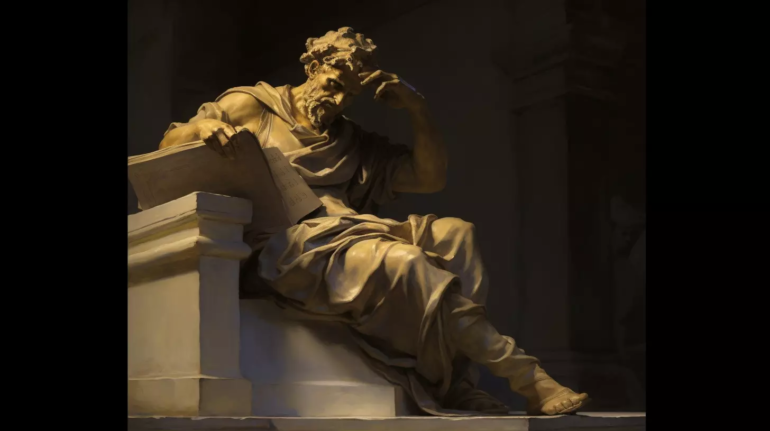
Why Plato is the light behind western philosophy

Plato the Light of Western Philosophy

⚫Plato’s philosophical works, especially “The Republic,” have shaped Western political thought, ethics, and justice.

⚫His emphasis on reason and philosophical principles in governance has influenced modern democracy and legal systems.

⚫Plato’s ideas on religion, truth, and contemplation have had a profound impact on interfaith dialogues and spiritual understanding.

⚫His legacy continues to resonate in contemporary culture, reflecting in literature, music, and a deep influence on ethical considerations.

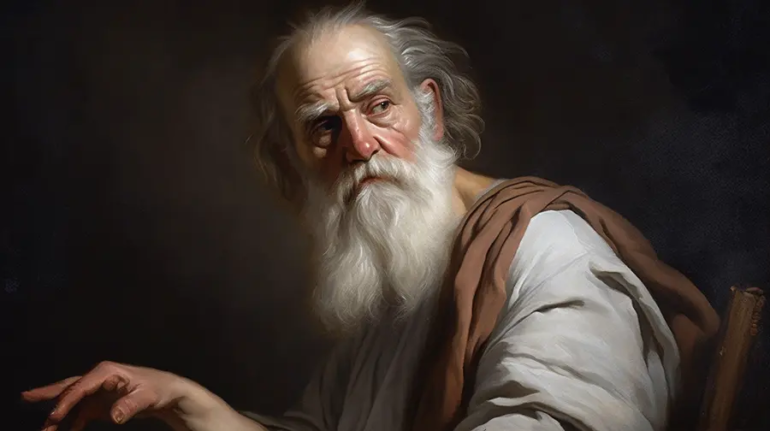
"Plato: The Philosopher's Gaze in the Style of Artemisia Gentileschi" by Midjourney/abjuniormnea

Plato’s Philosophy: An Empowering Voyage from Shadows to Enlightenment

⚫Plato’s philosophy is deeply rooted in his belief in the existence of a perfect, eternal world of Forms.
⚫The Allegory of the Cave is a metaphor for human perception, illustrating our struggle to reach understanding and enlightenment.
⚫Plato’s Theory of Forms argues that non-physical forms represent the most accurate reality.
⚫The philosopher king, according to Plato, is the ideal ruler, as he possesses knowledge of the good and the just.

An image of Confucius and Marx side by side, representing their contrasting philosophies

Confucius and Marx: Harmony vs. Revolution

⚫ Confucius and Marx represent contrasting philosophies, with Confucius advocating for traditionalism and harmony, while Marx calls for revolutionary change and equality.
⚫ Traditionalism, as seen by Confucius, emphasizes stability, respect for authority, and social hierarchies, while Marx’s revolutionism seeks to overthrow oppressive systems and create a more equitable world.
⚫ Both ideologies have left a profound legacy, influencing modern attitudes towards gender roles, political hierarchies, and economic systems in various parts of the world.
⚫ The balance between traditionalism and revolutionism continues to be a complex issue, requiring careful consideration of both perspectives to find harmony and meaningful solutions to current problems.

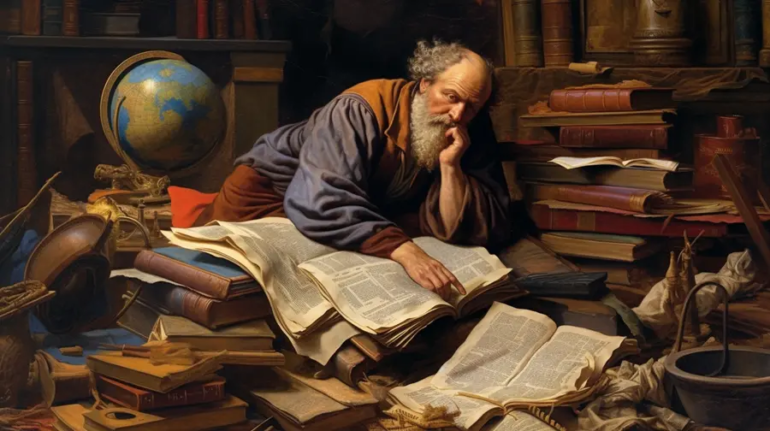
Socrates engrossed in thought, surrounded by the ancient texts and artifacts of Western philosophy

Classic Western Philosophy: Journey of Growth

⚫ Classic Western Philosophy offers a deep understanding of human nature, ethics, and the complexities of life.
⚫Studying the works of influential philosophers like Socrates, Plato, and Aristotle can enhance critical thinking and analytical skills.
⚫Engaging with philosophical writings allows us to appreciate life’s big questions and understand the impact of historical figures and events.
⚫The exploration of philosophical ideas provides a fresh perspective on life and the world, fostering self-awareness and personal growth.

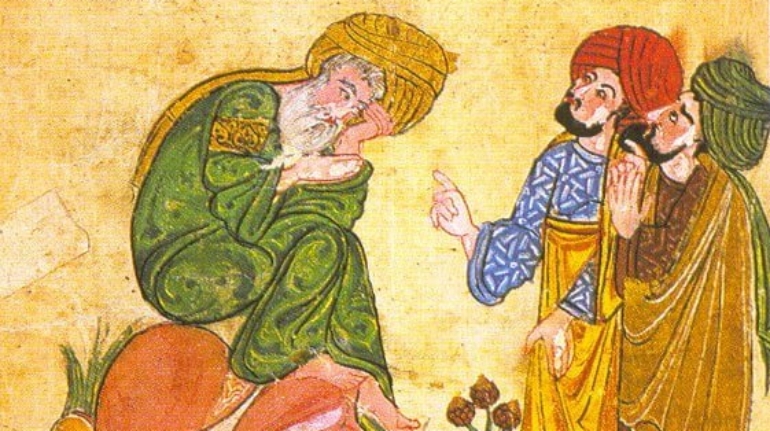
Depiction of Socrates in a manuscript by Al-Mubashshir ibn Fatik

Socrates: The Inspiring Legacy of Wisdom

⚫ Socrates’ life and teachings have had a profound influence on philosophy, encouraging critical thinking and self-reflection.
⚫ His Socratic Method and Dialectical Reasoning have shaped the way we approach knowledge and truth.
⚫ Despite his controversial trial and execution, Socrates’ legacy continues to inspire and shape philosophical discourse.
⚫ Comparisons between Socrates and other philosophers like Plato and Aristotle highlight his significant contributions to philosophy.

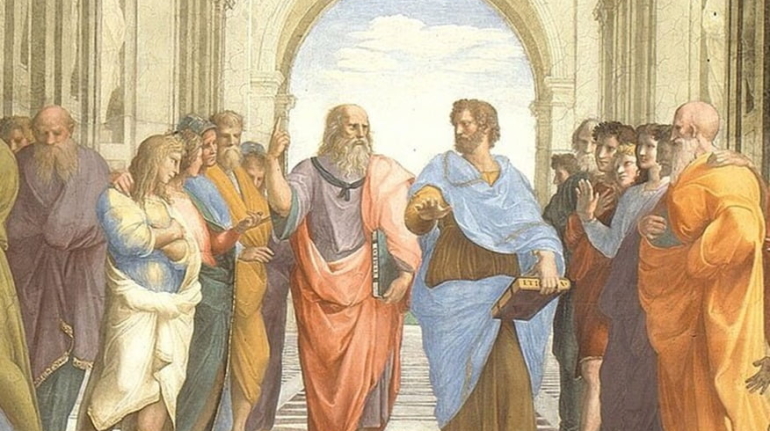
Raphael's 'The School of Athens' - A Visual Representation of Greek Philosophical Legacy-Plato left and Aristotle right.

Socrates, Plato & Aristotle: The Three Thinkers Who Built Western Thought

⚫ Question Everything: Socrates’ method promotes critical thinking and truth-seeking through questioning.
⚫Seek Deeper Understanding: Plato’s Theory of Forms encourages looking beyond the surface to understand the ideal form of things.
⚫Understand the Causes: Aristotle’s Four Causes theory provides a comprehensive framework for understanding the nature of things.
⚫Enduring Influence: The teachings of Socrates, Plato, and Aristotle continue to shape modern philosophy and thought.

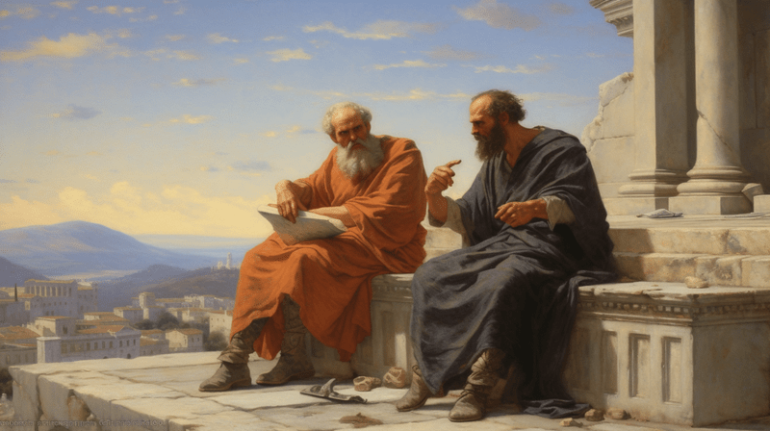
The Eleatics Revolution: Parmenides and Zeno's Discourse on Perception and Motion.

The Eleatics: Parmenides and Zeno of Elea

⚫ Parmenides and Zeno, the Eleatics, revolutionized philosophy with their exploration of logic, paradoxes, and metaphysics.
⚫ Parmenides proposed that reality is unchanging and that knowledge comes from rational reasoning, not sense perception.
⚫ Zeno, a student of Parmenides, used paradoxes to demonstrate that motion is an illusion caused by our perceptions.
⚫ The Eleatic school of thought, founded by Parmenides and continued by Zeno, had a profound influence on later philosophers like Plato and Aristotle.