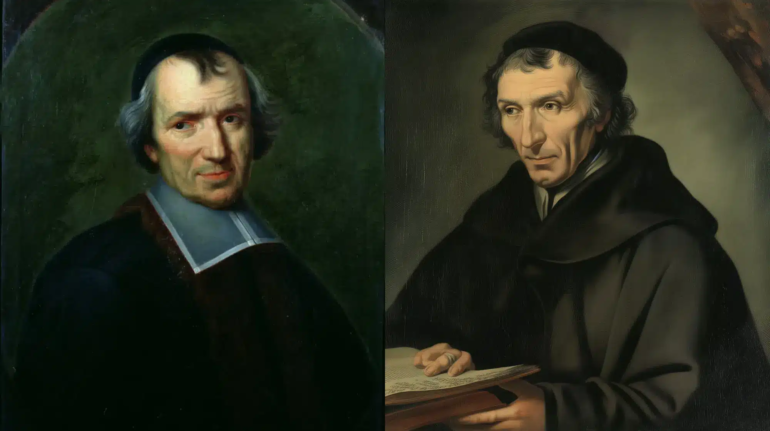
Historic portrait of Antoine Arnauld, showcasing the thoughtful expression of the 17th-century French philosopher and theologian known for his critical contributions to Jansenism and debates with Descartes.

Antoine Arnauld: A French Philosopher and Theologian

⚫Arnauld made significant contributions in the fields of philosophy, logic, and theology.
⚫The theological foundations greatly shaped his philosophical stances, especially because of his strong endorsement of Jansenism.
⚫Engaging in profound dialogues with influential thinkers such as Descartes and Malebranche, he greatly influenced contemporary discourse.
⚫His work explored the complex interplay between reason, faith, freedom of will, and moral responsibility.
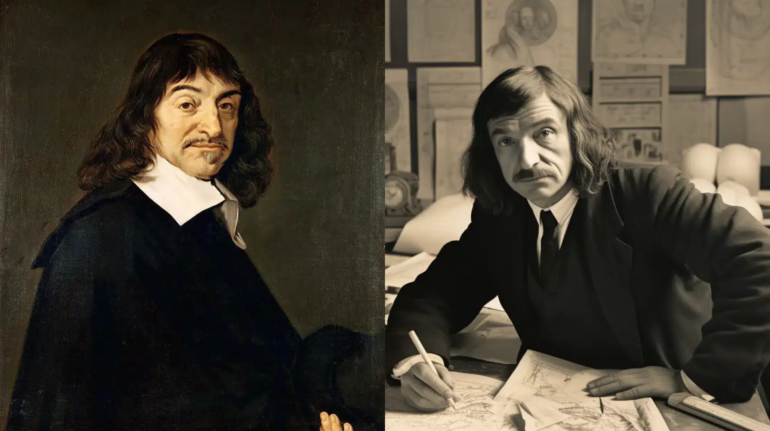
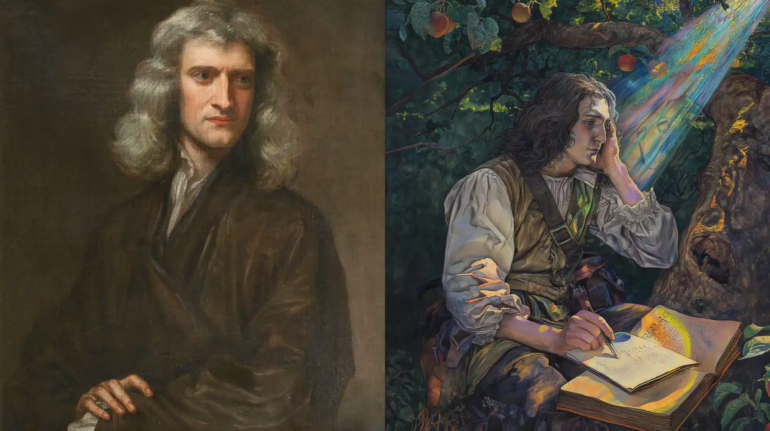
Painting of philosopher René Descartes with the Cartesian Coordinate System, symbolizing his contributions to modern philosophy and mathematics.

René Descartes: Father of Modern Philosophy & Mind-Body Dualism

⚫Descartes championed rationalism, emphasizing the primacy of reason in acquiring knowledge.
⚫He utilized radical skepticism to question existing beliefs and seek absolute certainty.
⚫In his exploration of the mind-body relationship, Descartes developed the theory of mind-body dualism.
⚫The Cartesian Coordinate System revolutionized geometry, laying the foundation for calculus.
⚫Descartes’ enduring legacy continues to influence philosophical debates on rationalism, empiricism, and the nature of knowledge.

Portrait of Thomas Hobbes with Leviathan concept - illustrating social contract theory and the foundation of state sovereignty.

Thomas Hobbes: Political Sovereignty and Social Contracts

⚫ Hobbes advocated for a strong central authority to maintain social order.
⚫ His philosophy emphasized the inherent selfishness and aggressiveness of individuals.
⚫ He proposed the social contract theory as a solution for governance.
⚫ Hobbes believed in the necessity of state sovereignty and absolute authority.
⚫Critiques include concerns about tyranny under absolute sovereign power and the suppression of freedoms.

portrait of Galileo Galilei in Renaissance attire, gazing intently towards the sky, with elements hinting at his astronomical discoveries.

The Age Of Science & Galileo Galilei’s Philosophical Legacy

⚫Galileo Galilei is a pioneer of modern science. His work in astronomy, physics, and philosophy laid the groundwork for scientific inquiry.
⚫He challenged the Earth-cantered view with his telescope, revealing a Sun-cantered solar system.
⚫He stressed experimentation. Galileo pioneered empirical science by verifying theories via observation and measurement.
⚫His work opposed Catholicism. Galileo’s heliocentrism and stress on reason clashed with religious authorities, exposing science’s conflict with faith.
⚫Modern science and philosophy were shaped by Galileo. His work in astronomy, physics, and science methods continues to influence science and philosophy.

illustration of Francis Bacon in a library, holding a scroll and an ethereal globe with scientific symbols, against a backdrop of celestial bodies, showcasing his role in advancing empirical methods.

Francis Bacon: Influence on Philosophy and Science

⚫Francis Bacon was a prominent figure in the transition from the Renaissance to the early modern era.
⚫He had a diverse career as a lawyer, member of Parliament, and Queens Counsel, and wrote on various topics such as law, state and religion, politics, society, and ethics.
⚫Bacon played an active role in the political aspects of religious conflicts and served on various committees.
⚫He rose to the highest political office as Lord Chancellor, but was later impeached by Parliament for corruption and lost all his offices and seat in Parliament.

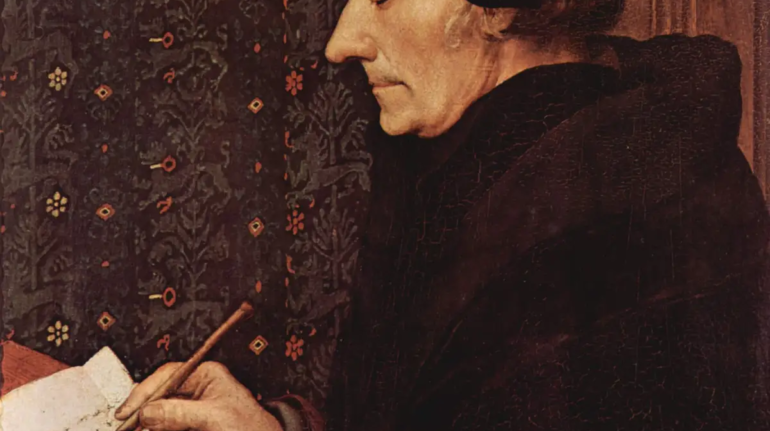
Historical portrait of Erasmus of Rotterdam, symbolizing his profound influence as a Renaissance humanist and philosopher, dressed in traditional garb of the era, with a thoughtful expression, epitomizing intellectual curiosity and scholarly pursuit.

Erasmus: Defying Orthodox Beliefs

⚫Erasmus pushed the limits of philosophy by exploring various traditions, including Platonism and Epicureanism.
⚫ He held the firm conviction that philosophy carried a moral responsibility for every individual, and thus, he established a code of conduct for communication to steer himself and others towards the genuine pursuit of wisdom.
⚫ Erasmus worked alongside influential individuals like Thomas More, John Colet, Aldus Manutius, and Johann Froben on a range of intellectual projects.
⚫ Despite the controversies and disagreements with theologians such as Martin Luther, Erasmus was a strong advocate for Church unity through conciliation. He firmly refused to align himself with the Protestant reformers.

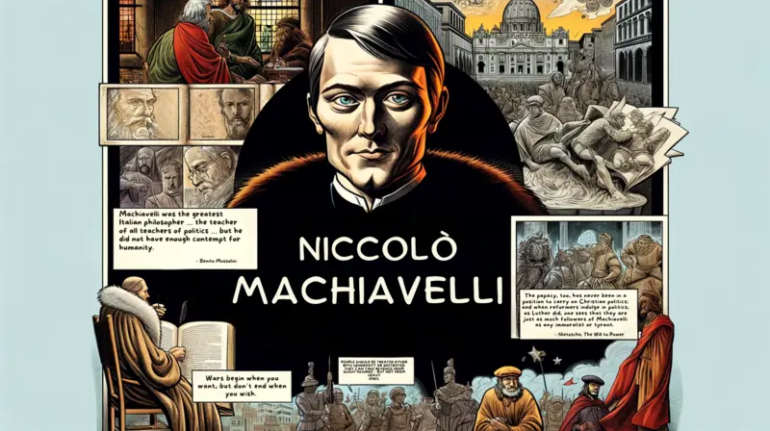
Portrait of Niccolò Machiavelli, depicting the influential Renaissance philosopher and statesman, symbolizing his enduring impact on modern thought.

Niccolò Machiavelli: The Realist Who Redefined Power and Politics

⚫ Machiavelli’s most famous work, “The Prince,” focuses on the techniques a successful politician must use to achieve their political ends, without regard to the moral justification of those means.
⚫ The ends justify the means in Machiavellian technique, meaning that if the political ends are considered good, it doesn’t matter how they are achieved.
⚫ Machiavelli believes that three primary political goods are national security, national independence, and a strong constitution.
⚫ Manipulation of others, including the populace, for power is at the heart of Machiavelli’s teachings, and appearing virtuous can often serve one’s political ends.

Nicolaus Copernicus portrait from Town Hall in Toruń - 1580, District Museum in Toruń, Public domain, via Wikimedia Commons

Copernicus to Newton: Galactic Science Breakthrough

⚫ Copernicus’s Heliocentric Model provided the catalyst for the age of Renaissance. ⚫The theory placed the Sun, not the Earth, at the centre of our solar system, challenging centuries of Aristotelian thought. ⚫This in turns provided significant contributions to astronomy, including the eccentric computational astronomy and celestial mechanics, setting the stage for future scientific advancements. ⚫Copernicus’s ideas inspired subsequent luminaries like Galileo Galilei, Johannes Kepler, and Sir Isaac Newton, each building upon his heliocentric theory in their respective fields.

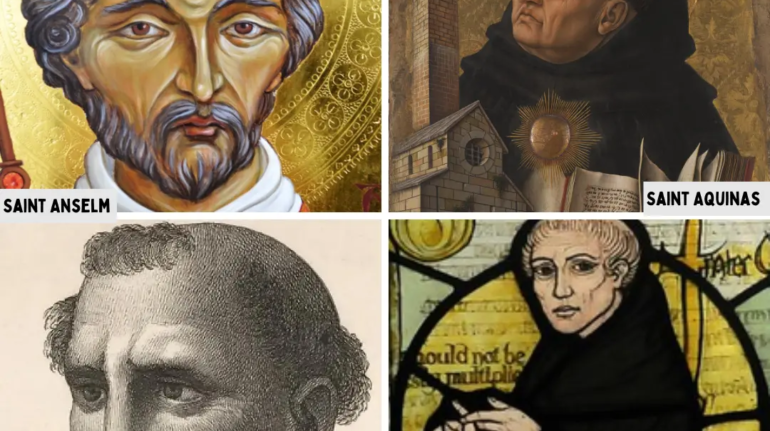
Collage depicting Saint Anselm, Thomas Aquinas, John Duns Scotus, and William of Ockham in a medieval study, symbolizing their contributions to philosophy and theology.

The Scholastics: Anselm to Occam Insights

⚫ Medieval Scholastics like Saint Anselm, Aquinas, Scotus, and Occam influenced modern thought in philosophy, religion, and science. ⚫ Saint Anselm’s “Proslogion” explored God’s existence and nature; discussed free will and determinism. ⚫ Thomas Aquinas synthesized Aristotelian thought with Christian theology in “Summa Theologica.” ⚫ John Duns Scotus, known for ‘Scotism’, debated divine omnipotence and ethics. ⚫ William of Ockham, noted for ‘Occam’s Razor’, emphasized logical simplicity. ⚫ Scholastic Movement blended Christian and philosophical ideas, impacting religious studies. Scholastics’ ideas contributed to the Renaissance and modern philosophical and scientific thought.